Lithium and the Next Phase of Energy Dominance
In the final quarter of 2025, the Donald Trump Administration accelerated its Warp Speed approach to critical minerals and energy security. China’s October rare earth retaliation—triggered by renewed U.S. trade pressure and resulting in a fragile, time-bound truce likely to expire around the 2026 midterm elections—marked a watershed moment.
A coordinated, whole-of-government effort has emerged to diagnose, prioritize and address each and every critical mineral vulnerability, while simultaneously ensuring there is sufficient, affordable electricity to compete in an increasingly AI-driven global economy.
As 2025 came to a close, Washington’s critical minerals discourse converged on two related questions:
- Which minerals are most critical from a U.S. national-interest perspective?
- Which policy tools should be used to secure them?
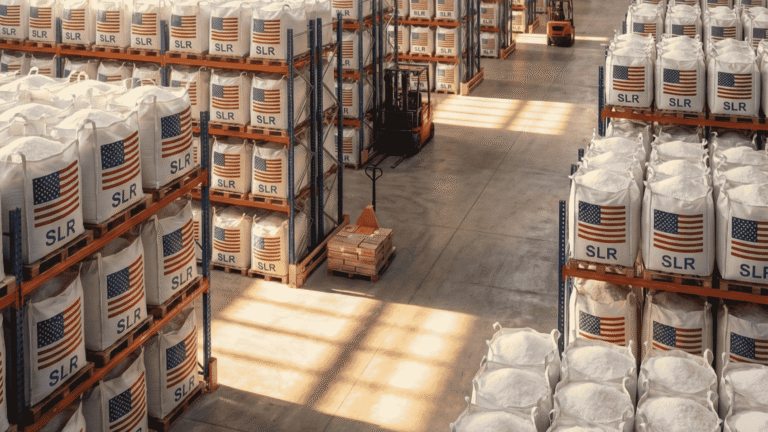
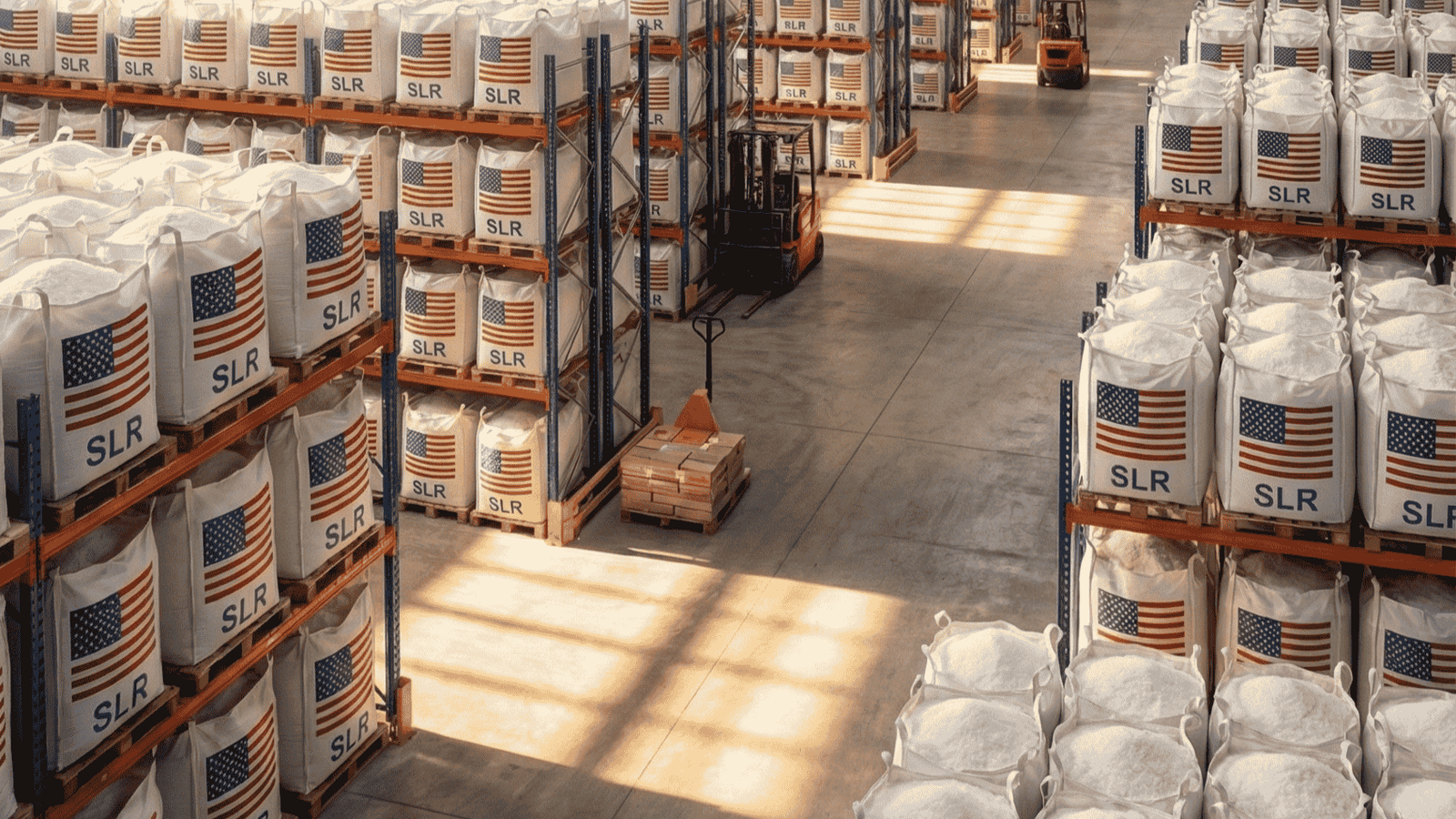
RK Equity proposed America’s Strategic Lithium Reserve (SLR) to reframe the second question, outlining its structure and market rationale in a foundational white paper published last month. The SLR is not a price floor, subsidy, or industrial policy experiment. It is a market-stabilization tool designed to reduce volatility, backstop demand during downcycles, and enable long-cycle investment in lithium conversion, cathodes, and batteries. This paper revisits that logic and places it in the context of recent uranium and nuclear fuel policy.
Much policy debate has focused on familiar tools—tariffs, tax incentives, grants, subsidized loans—while underweighting one of the most effective instruments the United States has historically used to stabilize strategic inputs: reserves and demand backstops. The Strategic Petroleum Reserve is the obvious precedent, but, as discussed below, equally instructive parallels are now emerging in the Administration’s approach to uranium and nuclear energy policy.
Several inter-linked narratives are emerging in U.S. industrial policy:
- Rare earths: mine to magnet
- Lithium: mine/brine to battery
- Uranium-to-nuclear energy dominance = lithium-to-battery energy dominance
The purpose of this update is to continue socializing the SLR as a first-among-equals policy tool. And to show how it can address not only a critical supply-chain vulnerability, but also unlock U.S. potential to move from net importer to net exporter of high-purity lithium chemicals over the next decade—mirroring the oil and gas energy dominance achieved over the past ten to fifteen years.
From rare earths to uranium to lithium: urgency versus scale
Rare earths dominated the 2025 critical minerals agenda for good reason. China demonstrated—explicitly—that it was willing to weaponize its control over rare earth processing and exports against both the United States and its allies. Restrictions on processing, export licensing, and downstream access exposed rare earths as a strategic Achilles’ heel in Trump’s trade negotiations with Xi Jinping.
That episode forced Washington to move beyond analysis and into action. A mine to magnet strategy—securing mining, separation, metal-making, and magnet manufacturing—became a national priority.
Rare earths are but one vulnerability. China has since signaled similar leverage in adjacent materials, including graphite. Lithium deserves Washington’s attention not because it has already been weaponized, but because the consequences would be far broader if it were.
What changed in 2025 is not simply which materials are being discussed, but which policy tools are now considered acceptable.
Uranium’s precedent for America’s Strategic Lithium Reserve
Washington has moved decisively to treat uranium fuel as a national-security input, rather than a commodity to be left entirely to market cycles. The government has explicitly encouraged industry cooperation, demand visibility, and long-term resilience across the nuclear fuel cycle—from mining and conversion through enrichment and fabrication through Defense Production Act authorities and coordination led by the Department of Energy.
Rather than relying on price floors, tariffs, or permanent subsidies, uranium policy is stabilizing the market through a combination of targeted government purchasing, long-dated demand signaling, and coordinated planning. In practice, this functions as price support through demand support: downside risk is reduced, investment expectations are stabilized, and capacity is underwritten before shortages emerge.
This framework is not labeled a traditional “reserve,” but serves the same purpose. It provides strategic insurance by ensuring continuous availability of fuel and smoothing cycles that markets alone have repeatedly failed to manage. The effect is to backstop demand and dampen volatility—exactly the role a strategic reserve plays—without imposing price controls or distorting market signals.
The significance here is not novelty. It is precedent. A side-by-side comparison of the uranium policy framework and the proposed SLR is provided in the appendix.
Uranium mining and processing are to nuclear energy dominance what lithium mining and processing are to battery energy dominance. In both cases, the “fuel” is foundational. In both cases, investment cycles are long and capital-intensive. And in both cases, price volatility prevents strategic resiliency.
Uranium policy addresses a medium-term challenge. Nuclear power is essential for long-run energy security, but most incremental capacity will not arrive until the 2030s. Stabilizing the fuel cycle today ensures that long-lived reactors can operate with confidence tomorrow.
That same logic now points directly to lithium.
Lithium’s role is broader—and more immediate
Lithium prices have risen rapidly in recent weeks, with battery-grade carbonate pushing $17,000 per tonne and the potential to move higher. Some will interpret this as evidence that the market is functioning and that strategic concern is easing. That interpretation misunderstands both lithium’s role and where value is actually accruing in the supply chain.
Margins remain concentrated upstream at the mine level, while chemical conversion—the true chokepoint identified in our earlier analysis—continues to face structural pressure. Higher spot prices alone do not resolve this imbalance, nor do they deliver the stable midstream investment required for long-term supply security.
Lithium is not simply another mined input. It is the foundation of battery infrastructure, and batteries are now core infrastructure for electricity systems, industrial capacity, AI deployment, and modern defense.
Rare earths power motors and machines. Lithium powers the systems those machines depend on.
Arkansas Senator Tom Cotton relayed his three soldiering mantras at a Benchmark Minerals conference last June: eat, sleep, charge your battery. Drones, autonomous systems, sensors, communications equipment, night-vision devices, and logistics platforms all depend on lithium batteries. Anything mobile, autonomous, or unmanned runs on them.
Lithium therefore sits at the intersection of energy security, national defense, and economic competitiveness in a way few other materials do.
Uniquely abundant conventional and unconventional resources—and skills
Unlike rare earths and magnets—where domestic capability must largely be rebuilt—the United States already retains deep chemical-processing expertise, a skilled industrial workforce, and corporate leadership capable of scaling rapidly once market stability is restored. And unlike most other critical minerals, lithium resources in the U.S., across Five Eyes countries, and in South America are uniquely abundant.
Lithium’s industrial immaturity and growth rate are also unmatched. Five years ago, global lithium demand was expected to roughly double by 2025. Instead, it more than tripled, reaching approximately 1.5 million tonnes last year. Current forecasts point to 10–20% compound annual growth over the next 5, 10, and 15 years—implying another doubling or tripling of the market. Within a few years, annual incremental supply will need to match what the entire global lithium industry produced in total little more than a decade ago.
No other critical mineral combines this scale, speed of demand growth, and strategic importance.
Much of North America’s lithium endowment is unconventional, including sedimentary deposits and salt lakes across the western United States, geothermal brines in California, and oil-field brines in the southeastern United States and western Canada. These resources sit alongside large, high-grade conventional spodumene deposits in North Carolina and eastern Canada.
This North American resource base can be complemented by additional allied feedstock—spodumene concentrates from Brazil and Australia and lithium brines from Argentina and Chile—refined and converted in the United States at industrial scale.
U.S. energy dominance came from unlocking unconventional resources—shale, oil sands, and deepwater production—once technology, capital, and market frameworks aligned. Lithium is one of the few critical minerals where the United States can likewise move from net importer to net exporter over the next decade—if it can help stabilize the conditions under which markets commit capital at scale.
Extract broadly. Refine at scale. Build depth.
The objective is not to mine every tonne domestically. It is to ensure that lithium can be extracted across allied jurisdictions where risk-adjusted returns make sense, and refined, qualified, and deployed at industrial scale.
The United States refines Canadian crude and oil sands because it has the infrastructure, skills, and market depth to do so competitively. Lithium can follow the same model. America can extract much of it. It can refine and process all of it.
Stability, not scarcity, is the binding constraint
What constrains the lithium battery economy today is not geology. It is volatility.
Lithium’s recent price behavior—swinging from roughly $8,000 per tonne to over $80,000 and back again within a four-year period—is without precedent among major industrial commodities. Such instability is not characteristic of well-functioning strategic markets. The purpose of an SLR is not to set prices, but to dampen extremes toward ranges more consistent with other large, capital-intensive commodities such as oil, copper or iron ore—where price cycles support continuous investment.
Lithium price instability discourages the very investments that matter most: chemical conversion, cathode active materials (CAM), precursor materials (PCAM), and battery manufacturing. These are capital-intensive, long-dated assets that cannot be financed on extreme price swings.
High prices for short periods do not deliver supply security. Stability does.
Enter America’s Strategic Lithium Reserve
The SLR is not designed to replace markets. It is designed to reduce the amplitude of price cycles, ensure against disruption, and enable long-cycle investment—applying to lithium the same national-security logic now accepted for uranium.
By acting as a counter-cyclical buyer and maintaining strategic inventory, the SLR limits downside risk while preserving market signals. Predictability enables long-term offtake agreements, unlocks financing, and allows battery manufacturing to scale with confidence. For illustration, volatility compression toward ranges historically sufficient to incentivize new supply—e.g., in the $20,000–$40,000 per tonne band—would represent normalization, not intervention.
China understood this sequencing. Under Made in China 2025, input stability came first, industrial scale followed, and exports came last. China’s Ministry of Commerce has already demonstrated a willingness to restrict exports of critical materials. A lithium reserve provides strategic insurance while strengthening market resilience.
Conclusion: from mine to battery
Rare earths revealed the U.S. and allied vulnerability.
Uranium policy has validated the response.
Lithium is where that response now must scale.
To be energy dominant in the 21st century, battery energy dominance is essential.
A robust mine to battery strategy—comparable in ambition to 2025’s mine to magnet effort—can solve not just the U.S.’s internal supply vulnerability, but also presents a unique opportunity to achieve lithium chemical export dominance similar to that achieved in the oil and gas sector.
The first principle of battery energy dominance is lithium.
And the first-among-equals policy tool is America’s Strategic Lithium Reserve (SLR).
Appendix: Uranium vs. Lithium — Same Doctrine, Different Scale and Time Horizon
| Dimension | Uranium (Current U.S. Policy) | Lithium (Strategic Lithium Reserve) |
| Strategic role | Nuclear energy dominance | Battery energy dominance |
| Primary use | Long-lived baseload power | Grid stability, AI, defense, mobility |
| Time horizon | Medium–long term (2030s+) | Near–medium term (2020s–2030s) |
| Governing authority | DOE + DPA | DOE / Treasury / DoD (proposed) |
| Core mechanism | Demand backstop + coordination | Strategic reserve + counter-cyclical buying |
| Market failure addressed | Long lead times, concentrated supply | Extreme volatility, underinvestment |
| Industry coordination | Explicitly encouraged | Explicitly required |
| Capital unlocked | Mining, conversion, enrichment, fabrication | Conversion, cathodes, batteries |
| Strategic risk | Nuclear fuel dependence | Battery, grid, AI dependence |